


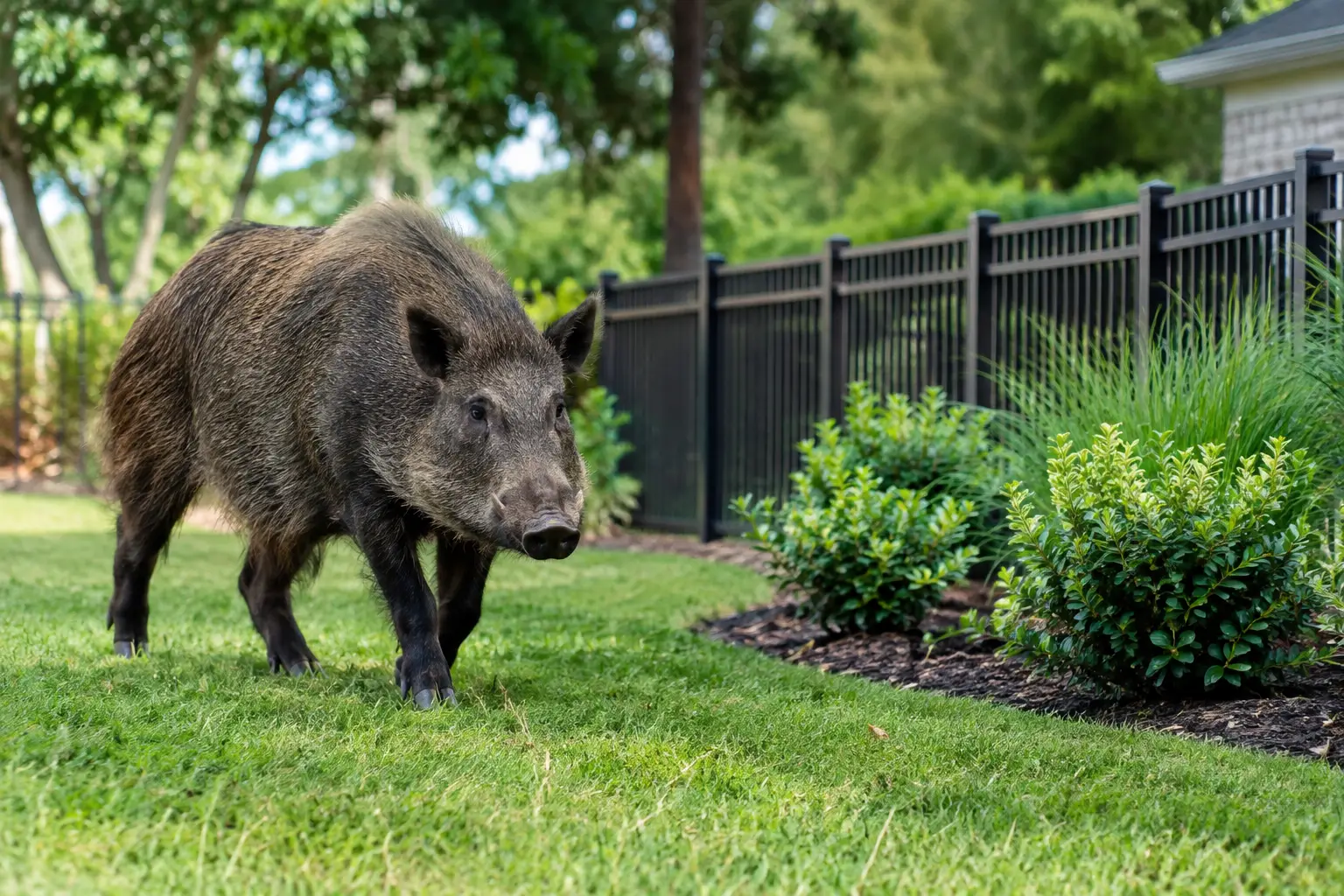
How to Protect Your Landscape From Wild Hogs

A wild hog can turn a smooth lawn into a field of craters in a single night. Rooting tears up turf, damages irrigation, exposes plant roots, and leaves flower beds looking like they were rototilled. If you are searching for how to protect landscape from wild hogs, the best answer is early, layered protection. Hogs are strong, persistent, and intelligent, so one light-duty measure rarely holds them for long.
The goal is not to harm wildlife. It is to make your lawn, garden, shrubs, and outdoor living areas difficult and unpleasant for hogs to use while removing the food, water, and easy access that keep bringing them back. The sooner you respond to fresh damage, the better chance you have of protecting the landscape you have worked hard to build.
Confirm That Wild Hogs Are the Problem
Wild hog damage has a distinct look. They root with their snouts as they search for grubs, worms, bulbs, fallen fruit, and other food beneath the soil. The result is often broad areas of flipped sod, shallow trenches, loose soil, and overturned mulch. Damage may appear overnight and can range from a few square feet to an entire lawn.
Look for hoof prints that are rounded at the front with two main toes. You may also find mud on low trunks, rubbed surfaces, droppings, or a strong musky odor near travel routes. Hogs commonly visit at dusk, overnight, or near dawn, especially where they can move from wooded cover into irrigated lawns or gardens without being seen.
Correct identification matters. Armadillos, moles, and raccoons can dig, but their damage is usually smaller and more focused. A hog problem requires stronger barriers and a larger-area strategy.
Protect Landscape Areas Before Hogs Establish a Routine
Hogs are creatures of habit. Once they find grubs in a lawn, ripe produce in a garden, or dependable water near a patio, they may return repeatedly with other hogs. Protecting vulnerable areas before repeated visits is far easier than convincing an established sounder to move on.
Start by removing what attracts them. Pick up fallen fruit and nuts promptly, harvest vegetables as they ripen, and keep compost enclosed. Secure pet food, birdseed, and livestock feed before nightfall. Repair dripping spigots, leaking irrigation heads, and low areas that hold standing water. These changes do not eliminate every reason hogs enter a property, but they reduce the reward for doing so.
Pay close attention to soft, irrigated ground. During dry weather, a well-watered lawn or mulched planting bed can become especially attractive because it is easier to root through and may hold more insects and worms. Adjusting irrigation to avoid unnecessary wet soil can help, provided your plants still receive the water they need.
Use Fencing That Can Handle Wild Hog Pressure
For high-value gardens, newly installed landscaping, and areas with repeated hog activity, fencing is often the most dependable physical defense. A decorative garden border or standard lightweight wire may slow a hog briefly, but it is not designed to withstand pushing, rooting, or repeated pressure from a large animal.
A properly installed electric fence can be highly effective because it teaches hogs to avoid the area. It needs to be maintained, powered, and kept clear of grass or vegetation that can reduce its charge. Placement and local conditions matter, so follow product instructions carefully and check local rules before installation.
Non-electric fencing can also work when it is sturdy, well-anchored, and buried or secured close to the ground. Hogs will test weak points, especially around gates, corners, and low spots. If a hog can lift the bottom edge or push through an opening, the barrier may become less effective after the first breach.
For many homeowners, it makes sense to fence the most valuable spaces rather than the entire property. Protect a vegetable garden, ornamental bed, fruit trees, or freshly laid sod first. This approach can control costs while shielding the places where damage would be most frustrating or expensive.
Apply a Humane Repellent as Part of a Layered Plan
A purpose-built wild hog repellent adds another important layer, particularly along property edges, travel corridors, and around landscape beds that cannot easily be fenced. Repellents work best when applied before hogs have made the area part of their regular feeding route.
Use an animal-specific formula and apply it exactly as directed on the label. SCRAM Wild Hog Repellent is formulated to help deter wild hogs from treated areas while supporting a humane, nature-respecting approach to property protection. Treat the perimeter where hogs enter, then reinforce vulnerable gardens, shrubs, mulch beds, and lawn edges.
Consistency matters. Rain, irrigation, intense weather, and new plant growth can affect how long a treatment remains active. Reapply on the recommended schedule and after conditions that may reduce coverage. Think of repellent as a boundary signal, not a one-time fix. It is most effective when the hog encounters the treated area before reaching food or soft soil worth rooting.
Avoid treating only the center of a damaged lawn. Hogs may simply approach from the side, root around the treatment zone, and keep the habit alive. A wider protective pattern around the target area gives you a better chance of changing their route.
Reduce Rooting Opportunities in Lawns and Beds
Wild hogs often root because the soil contains food. A healthy lawn can still attract them, but reducing insect activity and protecting soil surfaces may make the area less rewarding. If grubs are present, use an appropriate lawn-care approach for your region and grass type. Treating a grub issue alone will not stop every hog visit, but it can remove a major food source.
Fresh mulch and loose garden soil are easy to disturb. In ornamental beds, consider heavier mulch materials or protective edging where appropriate. Covering newly planted bulbs and securing vegetable rows can reduce immediate losses, although covers should be viewed as supplemental protection rather than a stand-alone defense against a determined hog.
Do not overlook irrigation equipment. Exposed drip lines, sprinkler heads, and shallow utility lines are vulnerable after rooting begins. Mark their location, inspect them after any hog activity, and make repairs promptly. A small leak can create the soft, wet patch that draws hogs back night after night.
Respond Quickly After the First Signs of Damage
Fresh rooting is your signal to act immediately. Waiting to see whether hogs return often gives them time to establish a dependable feeding pattern. Inspect the landscape during daylight, note likely entry points, and look for openings along fences, drainage areas, wooded edges, or neighboring vacant land.
Then use several measures at once: remove attractants, reinforce access points, protect high-value areas, and apply repellent along likely travel routes. A motion-activated light or sprinkler may add a brief surprise factor, but hogs can become accustomed to predictable devices. It is better used as a supporting measure than as your primary defense.
If hogs are repeatedly entering the property, damaging large areas, behaving aggressively, or traveling in a group, contact your local wildlife agency or a qualified wildlife-control professional. Wild hog management is regulated in many areas, and professional guidance can help you respond safely and legally. Keep children and pets away from active hog areas, especially if piglets are present, because adults may become defensive.
Repair Damage Without Making the Area More Attractive
After hogs leave, repair the lawn promptly so exposed soil does not become an easy feeding ground. Rake displaced turf back into place when possible, fill deeper holes, and reseed or replace damaged sod as needed. Check irrigation before restoring the area, since a broken line can create muddy conditions that invite another visit.
In planting beds, reset uprooted plants, firm the soil around roots, and water only as needed for recovery. Avoid leaving fallen fruit, damaged vegetables, or freshly turned soil exposed overnight. Recovery is also the right time to improve perimeter protection, because it is easier to make thoughtful changes before the next visit.
Wild hog pressure can change with drought, seasonal food availability, and nearby development. Stay alert after storms, during dry spells, and when acorns, fruit, or garden crops are abundant. A protected landscape is not built with one product or one repair. It is maintained by making your property a less rewarding stop than the land around it.


Comments