


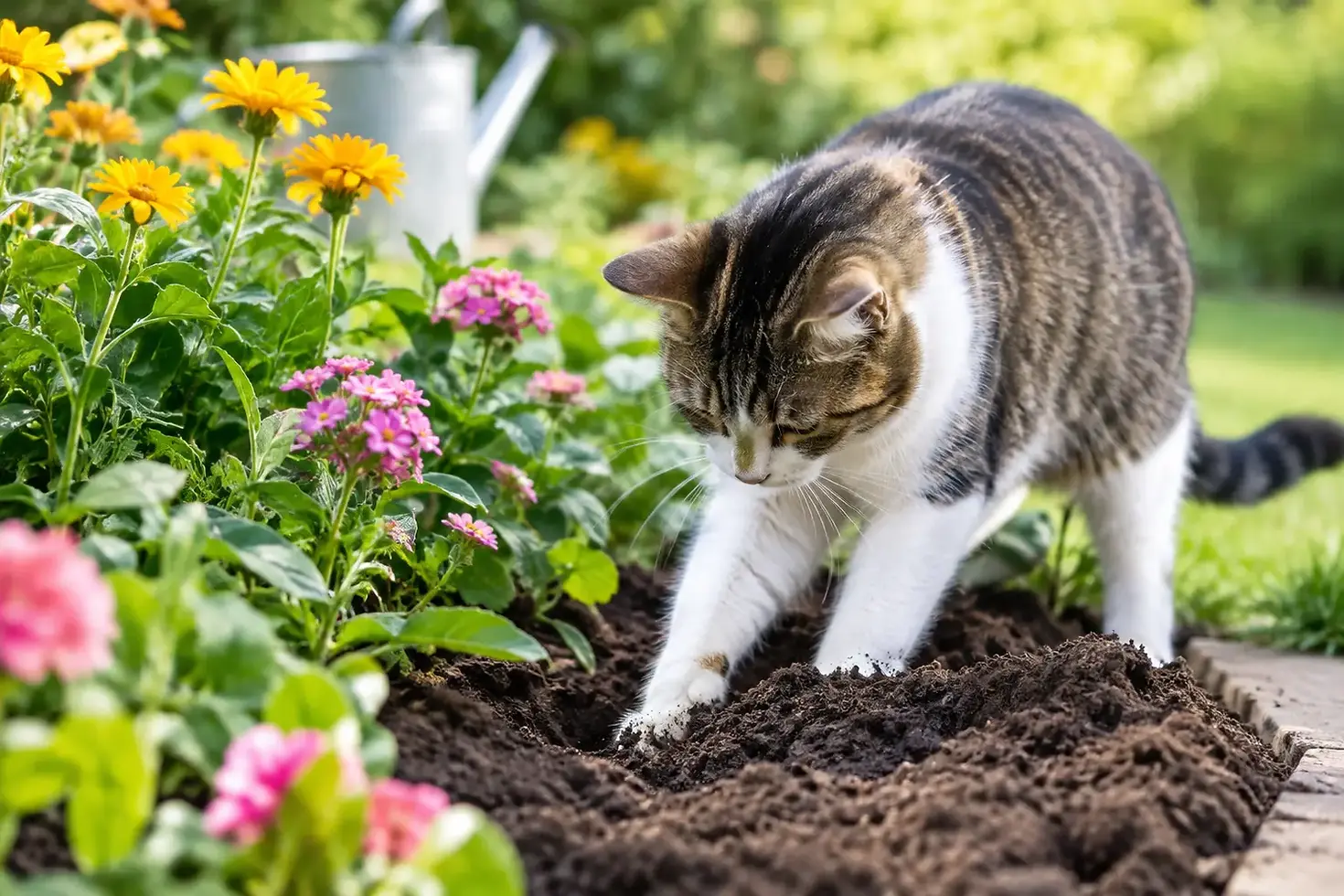
Stop Cats Digging Flower Beds With Humane Fixes

A freshly planted flower bed can become a cat’s favorite digging spot overnight. One morning, your mulch is scattered, tender annuals are uprooted, and an unpleasant surprise may be buried beside the plants you worked hard to grow. The good news is that you can stop cats digging flower beds without harming neighborhood cats, your own pets, or the wildlife that visits your yard.
Cats dig because a well-kept bed offers exactly what they want: loose, dry soil, a little privacy, and room to cover their waste. The most dependable solution is not one harsh trick. It is making the bed physically less inviting while consistently applying a humane cat-specific deterrent around the areas you need to protect.
Why Cats Choose Your Flower Beds
Cats are naturally drawn to loose soil and finely textured mulch. Freshly turned garden soil is especially appealing because it is easy to dig and cover. Raised beds, borders along fences, and beds near shrubs can be even more attractive because they give a cat a sheltered place to pause unnoticed.
A cat may also return because the area already carries its scent. Once a bed has been used as a bathroom, it can become part of that cat’s routine. That is why a one-time cleanup rarely solves the problem. You need to remove the attraction and disrupt the habit for several weeks.
Before you act, make sure cats are actually causing the damage. Cats tend to leave shallow, loose holes and may bury waste. Larger holes, chewed roots, or tunnels may point to squirrels, skunks, armadillos, moles, or other digging animals. Matching your approach to the animal behind the damage prevents wasted time and protects your landscape more effectively.
Stop Cats Digging Flower Beds by Changing the Surface
The simplest way to discourage digging is to cover the exposed soil. Cats prefer open, soft ground. A surface that feels awkward under their paws makes the bed less useful without making it dangerous.
Add a protective mulch layer
A thicker layer of coarse mulch can make a difference, particularly in open areas between plants. Pine cones, chunky bark, stones, and larger wood mulch are less comfortable for digging than bare soil or fine shredded mulch. Keep mulch a few inches away from plant stems and crowns so you do not trap excess moisture against them.
Rocks can look attractive around established perennials and shrubs, but they are not right for every garden. In hot climates, rock can hold heat and may make conditions harder on some plants. Use it selectively where it fits your landscape and your plant needs.
Use garden mesh or plant supports
For newly planted beds, lay flat garden mesh, chicken wire, or a purpose-made soil cover directly over the soil, then cut openings for plants. Secure the edges so a cat cannot push underneath it. As plants fill in, the mesh becomes less noticeable and the uncovered soil disappears.
This is especially useful for vegetable starts, bulb beds, and seasonal annuals that leave a lot of bare space at first. Choose materials with smooth or protected edges, and check them regularly. The goal is to create an uncomfortable digging surface, not a hazard for paws, birds, or beneficial wildlife.
Fill empty spaces quickly
Wide gaps between plants are invitations for digging. Adding low-growing groundcovers, placing containers in bare corners, or using decorative stones around established plants can remove the open patches cats seek out. In a vegetable garden, temporary row covers or supports can protect vulnerable soil until plants become established.
Clean Up Existing Cat Activity Promptly
Remove visible waste with gloves, then wash your hands and sanitize any tools that contacted it. Cat waste can carry organisms that should not be handled casually, particularly around edible gardens. Avoid composting pet waste or working it into your soil.
Rake over disturbed areas and replace any scattered mulch. If a cat has repeatedly used one area, remove the contaminated top layer of mulch or soil if practical and replace it with clean material. This helps reduce lingering odor cues that encourage repeat visits.
If you grow food, rinse produce thoroughly before eating and keep children away from areas where pet waste has been found. A protected garden is not just better looking. It is a cleaner place to grow flowers, herbs, and vegetables.
Use Humane Scent Deterrents Consistently
A purpose-built cat repellent can reinforce physical barriers by making the bed less appealing to a cat’s sensitive nose. Apply an all-natural cat deterrent around the perimeter of the bed, at entry points, and in the specific spots where digging has occurred. Follow the product label carefully, including guidance for application around plants, rainfall, and reapplication.
For homeowners who want an animal-specific option, SCRAM for Cats is designed to help deter cats from gardens, ornamental beds, shrubs, and other protected outdoor spaces when used as directed. A granular formula is often useful for creating a protective boundary around beds, while a spray can help target smaller areas or repeat trouble spots.
Consistency matters more than overapplying. Reapply after heavy rain, irrigation, mowing nearby areas, or other conditions that may reduce the deterrent’s presence. Cats may test an area several times before changing their route, so maintain protection long enough to break the pattern.
Avoid relying on strong household ingredients such as cayenne pepper, mothballs, bleach, ammonia, or essential oils. They can irritate animals, contaminate soil, create risks for children and pets, or damage plants. Humane deterrence should protect your property without creating a new problem in the process.
Make the Rest of the Yard Less Appealing
Flower beds are often only one part of a cat’s travel route. Look for easy access points along fence lines, gaps beneath decks, dense shrub borders, and quiet spaces near sheds. You may not be able to keep every roaming cat out of an unfenced yard, but you can make your most valuable planting areas much less rewarding.
Motion-activated sprinklers can work well in areas where water use is practical. Cats generally dislike a sudden spray of water, and the surprise teaches them to avoid the location. Position sprinklers so they cover the approach to the bed rather than soaking flowers or repeatedly spraying a walkway.
Remove other reasons cats may linger. Secure garbage, clean up spilled birdseed, and do not leave pet food outdoors. If you feed your own cat outside, move the feeding area away from flower beds and bring dishes in once mealtime is over.
Homeowners with outdoor cats should also consider whether a designated litter area, placed away from gardens and maintained regularly, could redirect the behavior. This will not always affect unfamiliar neighborhood cats, but it can make a real difference for pets that live on your property.
Protect New Plantings During the Highest-Risk Period
Cats are most likely to disturb a bed right after it has been planted, weeded, or refreshed with mulch. At these times, the soil is loose and plant roots are not yet firmly anchored. Temporary protection can prevent a small nuisance from turning into lost plants and repeated cleanup.
For the first two to four weeks after planting, combine a surface barrier with a cat deterrent. Check the bed every few days for new holes, displaced mulch, or signs that a cat is approaching from a different direction. If one spot stays active, focus your treatment there rather than treating the entire yard more aggressively.
Be patient with seasonal changes. Dry weather can make loose beds more appealing, while spring planting and fall cleanup often expose more bare soil. A prevention routine that works in summer may need a quick refresh during the next planting season.
When the Problem Keeps Returning
Repeated digging does not mean you need a harsher solution. It usually means the cat still has an easy approach, an exposed patch of soil, or an established habit. Reassess the bed from the cat’s perspective: Where can it enter? Which corner is quietest? Is there a soft area left uncovered after watering or weeding?
Layering two or three humane tactics usually brings better results than depending on one. For example, coarse mulch plus mesh around new plants plus a properly applied cat repellent creates a far clearer message than any single method alone.
If the animal appears injured, abandoned, or trapped, contact a local animal welfare organization rather than trying to handle it yourself. Responsible property protection and respect for animals can work together.
Your flower beds should be a place for color, growth, and time outdoors - not a daily repair job. Protect the soil early, stay consistent, and give cats a clear reason to choose another place to dig.


Comments