


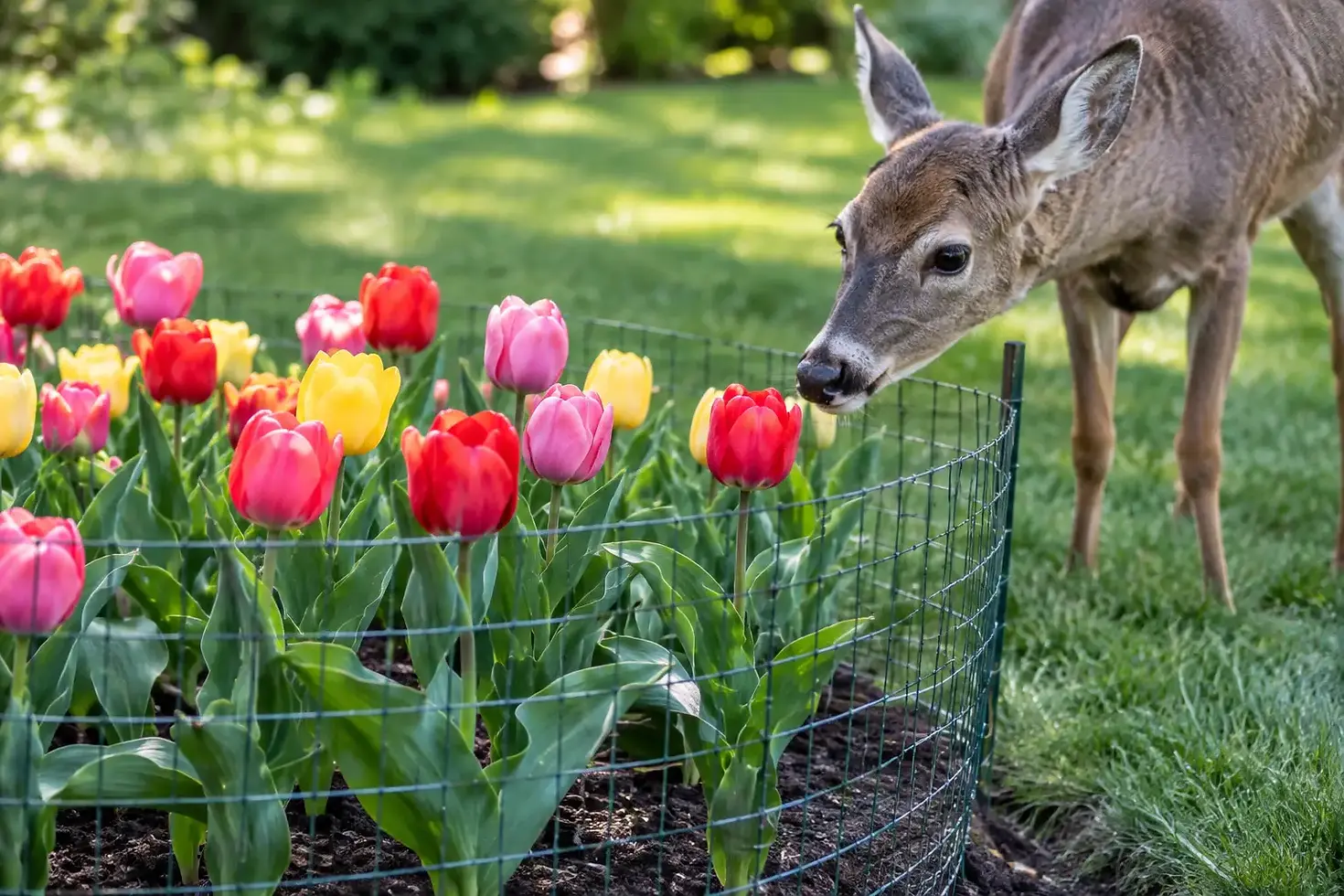
7 Best Ways to Protect Tulips From Animals

A tulip bed can look perfect one evening and be reduced to clipped stems, scattered bulbs, or freshly dug holes by morning. The best ways to protect tulips start with identifying what is visiting your yard, then building a layered defense before hungry wildlife learns your garden is an easy meal.
Tulips are especially vulnerable because they offer something attractive at nearly every stage. Deer and rabbits browse the tender leaves and flower buds. Squirrels, chipmunks, voles, and other digging animals may uncover and carry away bulbs. A practical plan protects both the spring display you can see and the bulbs resting below the soil.
1. Identify the Animal Damaging Your Tulips
The damage pattern often tells the story. Deer usually leave ragged, torn stems and may browse several plants in a single pass. Rabbits tend to make clean, angled cuts close to the ground, especially on young shoots. If blooms disappear while leaves remain, deer may be reaching over a short barrier.
Digging points to a different problem. Shallow holes and displaced bulbs often suggest squirrels or chipmunks. Tunnel openings, damaged roots, and plants that collapse without obvious browsing can indicate voles. Do not treat every tulip problem the same way. Matching your protection method to the animal saves time and avoids repeating the same frustrating season.
2. Use Fencing Where Browsing Pressure Is High
Physical barriers are the most dependable option when deer or rabbits visit often. For rabbits, a small-gauge wire fence around the bed can work well when it stands at least 24 inches high and extends a few inches below ground level. Rabbits can squeeze through surprisingly small spaces, so secure the bottom edge and check for gaps.
Deer require more planning. A short decorative border will not stop a determined deer. A fence around 7 to 8 feet high is generally the most reliable choice for a heavily pressured yard, though it may not suit every landscape. In smaller beds, temporary netting or a supported mesh enclosure can protect tulips during the brief period when shoots and blooms are most exposed.
Barriers have trade-offs. They can change the look of a front garden and require storage after the season. But where repeated grazing has ruined your display, they provide immediate, humane protection without harming wildlife.
3. Apply an Animal-Specific Repellent Early
Repellent works best before damage begins, not after deer or rabbits have already made tulips part of their feeding route. Use a formula designed for the animal causing the problem, and apply it according to the label directions around the planting area and vulnerable plants. An animal-specific approach is more purposeful than relying on one general remedy for every visitor.
For browsing animals, begin when green shoots first emerge. Reapply as directed, particularly after heavy rain, irrigation, or periods of fast new growth. Young leaves and unopened buds are the most tempting parts of the plant, so consistency matters during early spring.
For digging pests, use protection around the bulb bed before and after planting as directed. Long-lasting granular repellents can be especially useful around landscape beds because they create a protective zone without requiring you to rebuild a barrier every few days. EPIC Repellents offers purpose-built SCRAM formulas for many of the animals that damage gardens, helping homeowners address the specific pest instead of guessing.
Always follow label instructions. Even natural repellents need to be applied correctly to perform as intended and to protect people, pets, plants, and wildlife responsibly.
4. Protect Tulip Bulbs at Planting Time
The strongest tulip defense often begins in fall. If squirrels, chipmunks, or voles routinely dig in your beds, do not simply plant bulbs and hope they go unnoticed. Create a physical layer over the planting area with hardware cloth or a bulb-protection cage. The mesh should allow roots and stems to grow through while making it harder for animals to reach the bulbs.
After planting, cover the bed with soil and a light layer of mulch. Avoid leaving papery bulb skins or loose bulbs on the surface. Those scraps can advertise exactly what you planted. Water the area in well so the soil settles and looks less like a freshly disturbed digging site.
Some gardeners add sharp gravel around bulbs to discourage tunneling. This can help in certain soils, but it is not a complete answer for an active vole population. If you see runways or repeated tunneling, combine planting protection with a targeted vole deterrent and regular monitoring.
5. Keep the Bed Clean and Less Inviting
Wildlife is more likely to linger where it finds easy cover, food, and undisturbed access. Keep fallen birdseed, pet food, and spilled feed away from flower beds. Bird feeders can attract squirrels, mice, and chipmunks that may then investigate newly planted bulbs nearby.
Trim dense ground cover around tulip beds when practical, especially if voles are a concern. Voles prefer protected travel routes under thick vegetation, leaf piles, and heavy mulch. You do not need to leave soil bare, but keep mulch moderate and pull it slightly away from emerging stems.
Check irrigation, too. Constantly wet ground can make a bed more attractive to some pests and may weaken tulip bulbs over time. Tulips prefer well-drained soil, so correcting drainage supports healthier plants while removing one more condition that can encourage unwanted activity.
6. Add Motion and Visual Deterrents Strategically
Motion-activated sprinklers, lights, or sound devices can interrupt deer and rabbit visits, especially in smaller yards. They are most helpful when animals are still testing the area rather than feeding there every night. Move these devices periodically so wildlife does not become accustomed to their location.
Visual deterrents such as reflective tape, pinwheels, or hanging objects can offer a short-term boost during bud season. They are not usually enough as a stand-alone solution in a yard with established deer pressure. Think of them as another layer, not your main line of defense.
A motion sprinkler has an added advantage during the growing season: it creates an immediate surprise without causing injury. Position it carefully so it covers the route animals use to enter the bed, not just the tulips themselves.
7. Plant a Wider Defense Around Your Tulips
Tulips may be irresistible to deer and rabbits, but nearby plants can help make the bed less appealing. Strongly scented or textured ornamentals such as alliums, daffodils, lavender, catmint, and certain herbs are often less attractive to browsing animals. Planting them around tulips does not guarantee protection, especially when food is scarce, but it can reduce the visual and feeding appeal of a tulip-only planting.
This strategy works best when paired with repellent and barriers. Hungry animals can eat plants they normally avoid, particularly in early spring when tender food is limited. A mixed planting is useful landscape design, not a promise that deer or rabbits will stay away.
When to Increase Protection
Do not wait for major damage before stepping up your plan. Increase protection if you notice fresh tracks, droppings, clipped foliage, shallow digging, or repeated nighttime visits. A single nibbled tulip can become an entire bed of missing blooms once an animal recognizes the food source.
Spring weather can also change the risk. Late snow, dry conditions, and limited natural forage may push deer and rabbits closer to ornamental plantings. In fall, fresh soil and newly planted bulbs can attract digging animals quickly. Seasonal awareness lets you protect the bed when it matters most.
Your tulips do not have to become a buffet for every animal passing through the yard. With early action, the right barrier, and a humane repellent matched to the pest, you can enjoy the flowers you planted while keeping wildlife safely moving along.


Comments